For months, I blamed myself for photographs that were inexplicably dark—especially several sheets of Velvia 50. A controlled test eventually revealed that the problem wasn’t my metering. It was a mismatched “Frankenlens” whose focal length and aperture markings no longer described what the assembled optical system actually did.
The original mystery
The lens was labeled as a Fujinon 90mm, but its field of view looked suspiciously narrow. Comparing it with a genuine 90mm revealed approximately a 1.72× difference in image scale.
Multiplying 90mm by 1.72 gives approximately 155mm. In other words, the Frankenlens was behaving more like a 155mm lens wearing a 90mm nameplate.
That raised another question: if the optical groups no longer produced a 90mm focal length, could the shutter’s engraved aperture scale still be correct?
The controlled exposure test
I photographed the same outdoor scene on Rollei Infrared 400 without a filter. All three negatives were exposed at:
Marked aperture: f/22
Shutter speed: 1/15 second
Same outdoor meter reading
Two frames made with a known-good 90mm
One frame made with the Frankenlens
The film was developed in XTOL 1:1 for 15 minutes 45 seconds at 70°F and fixed for five minutes.
I then camera-scanned the negatives as three DNG files:
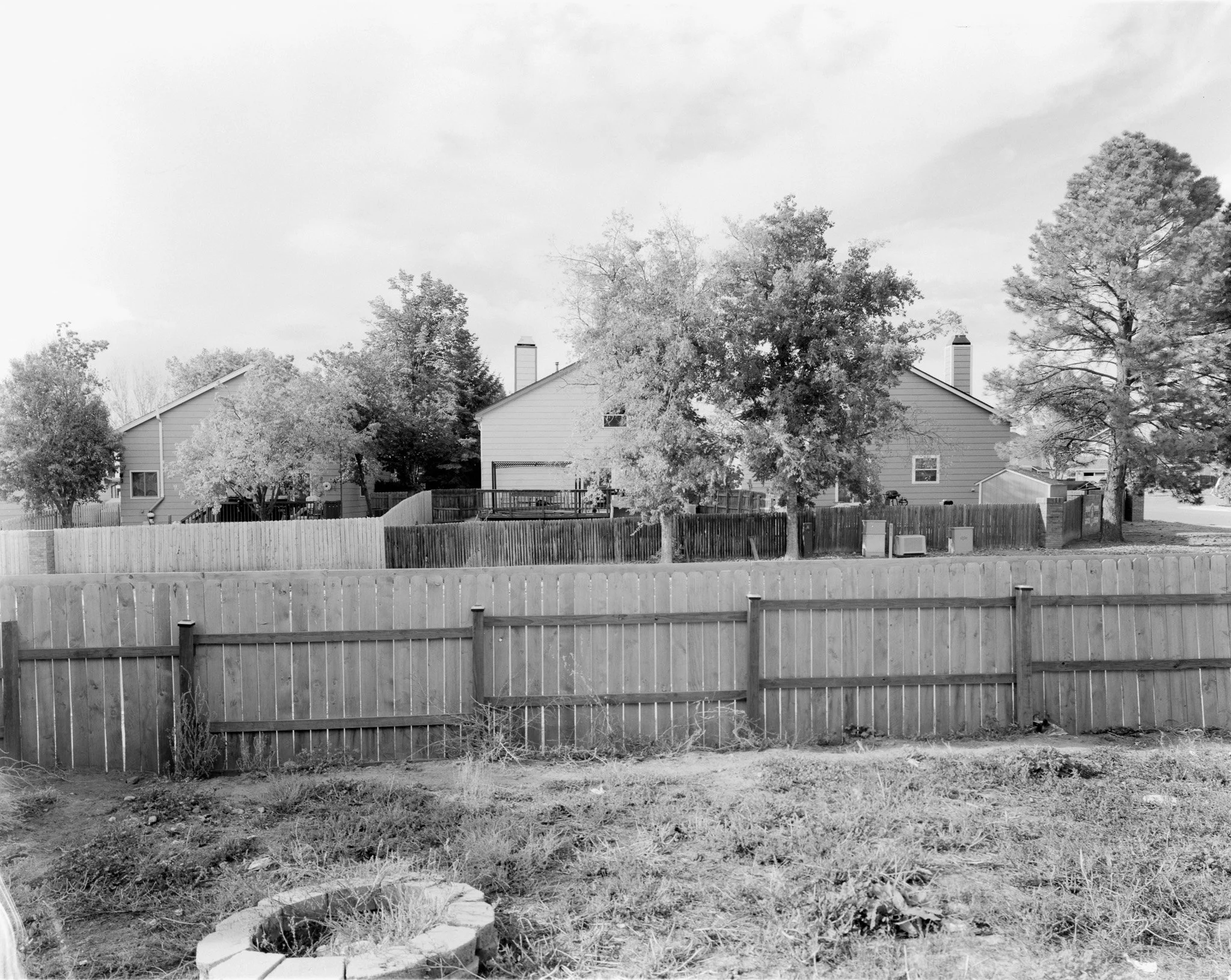
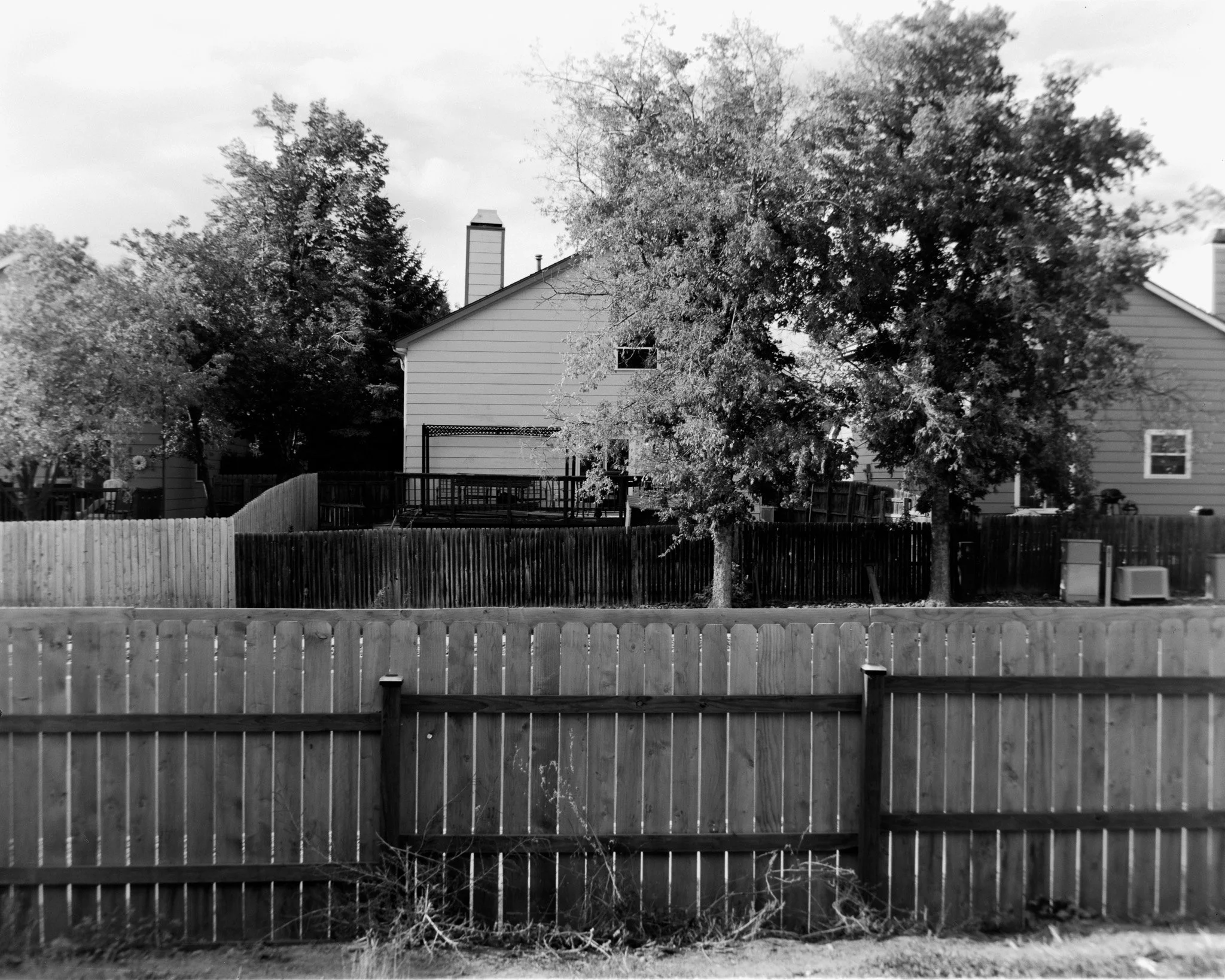
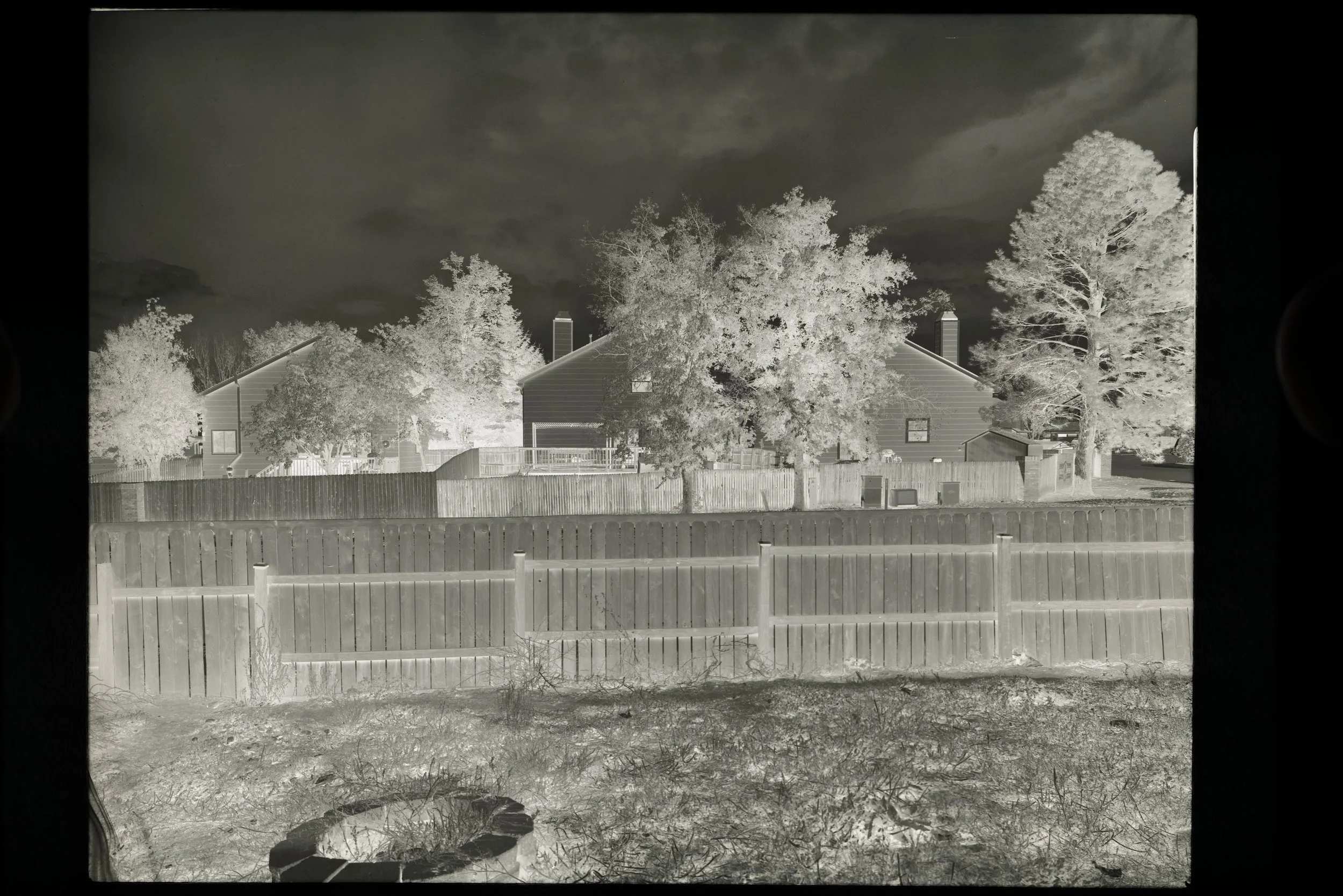
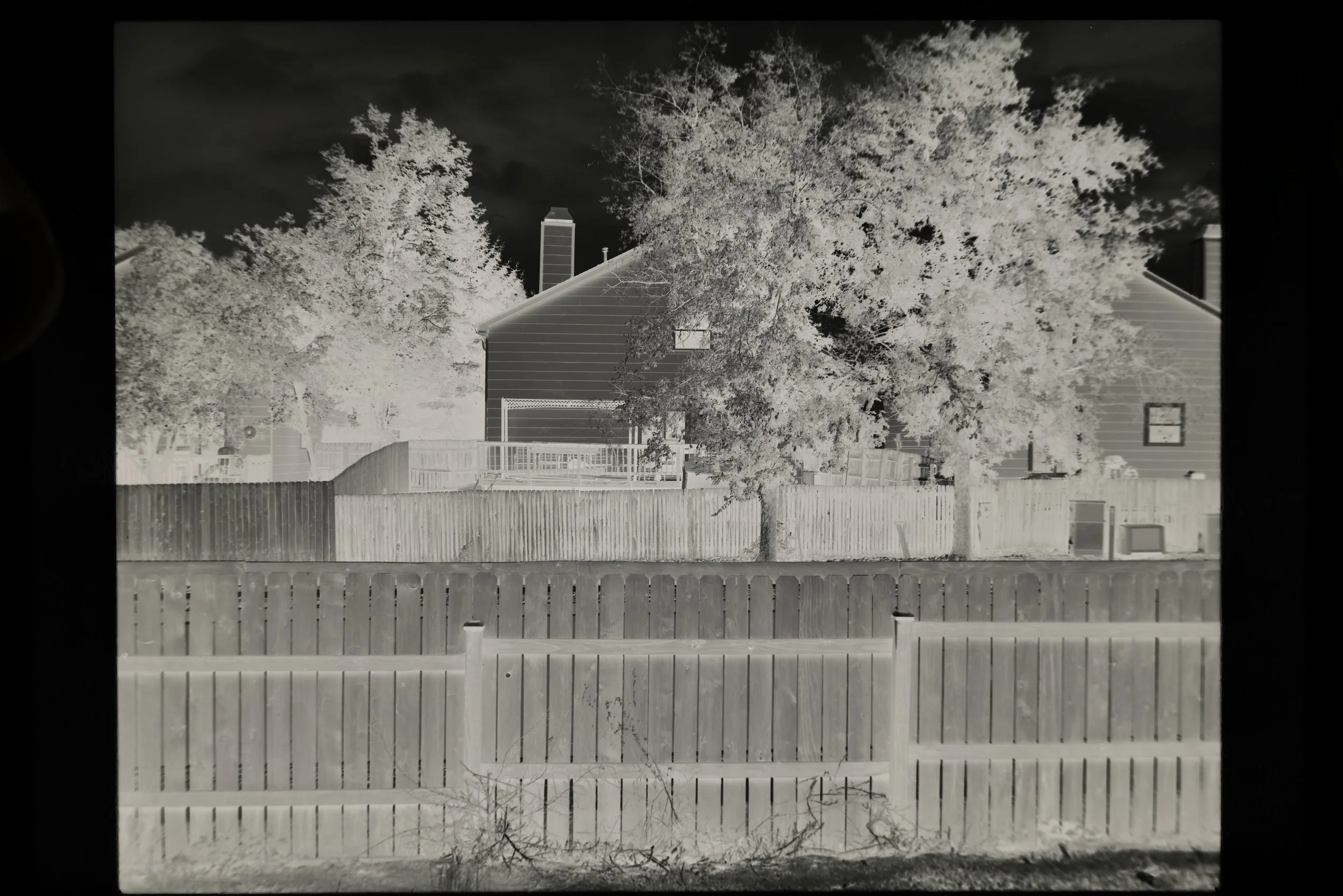
Identifying the Frankenlens frame.
The three scans were geometrically compared using scene details such as the houses, fences, trees, and rooflines.
Frame L1020929.DNG required approximately a 1.72× scale correction to match the other two:
Compared with 927: 1.730×
Compared with 930: 1.716×
Average: approximately 1.72×
That independently identified 929 as the Frankenlens exposure. Frames 927 and 930 were the genuine 90mm exposures.
Accounting for the scanning exposures
The shutter speeds recorded in the DNG metadata belonged to the digital scanning camera—not the original film exposures:
927: 1/40 second
929: 1/160 second
930: 1/50 second
All at ISO 100 and f/5.6
This distinction was critical. The Frankenlens negative was thinner, so it transmitted more light and required a much shorter digital scanning exposure. I extracted the linear 14-bit Bayer data directly from each DNG, subtracted the sensor’s black level, and divided the remaining signal by the digital camera’s scanning exposure time. This produced a measurement proportional to each negative’s actual transmission.
No inverted positive rendering, automatic levels, tone curve, or JPEG brightness was used for the measurement.
Remembering that these were negatives
A negative has the opposite polarity from a finished positive image:
A denser negative transmits less scanning light and represents more original exposure.
A thinner negative transmits more scanning light and represents less original exposure.
After correcting for the digital scanning exposures, corresponding parts of the Frankenlens negative transmitted substantially more light. The Frankenlens frame had therefore received less exposure in the original camera.
Registering corresponding scene areas
The Frankenlens image was reduced by approximately 1.72×, rotated slightly to compensate for differences in how the negatives were positioned during scanning, and aligned with each known-good frame.
The comparison excluded:
Film borders
Clipped pixels
Extreme highlights and shadows
High-contrast edges sensitive to tiny registration errors
Moving leaves and branches
Areas strongly affected by edge aberrations
Measurements were concentrated on smooth, corresponding midtone regions near the center of the image.
The red, green, and blue raw channels were also measured separately. They agreed within approximately 0.02 stop, indicating that the result wasn’t caused by a color or infrared-transmission difference between the lenses.
The measured density difference
The Frankenlens negative’s transmission differed from the two good negatives by:
Versus 927: approximately 1.93 transmission stops
Versus 930: approximately 1.68 transmission stops
The best combined estimate was approximately 1.8 transmission stops, with an uncertainty of about ±0.2 stop.
That means corresponding parts of the Frankenlens negative transmitted approximately 3.5 times as much scanning light.
Expressed as conventional optical density, the difference was approximately 0.54.
The two good negatives differed from one another by roughly 0.14–0.2 stop after scan normalization. That provided a useful estimate of the combined uncertainty from development, scanning illumination, registration, and ordinary exposure variation.
Converting negative density into camera exposure
Negative density does not change one-for-one with exposure. The conversion depends on the slope—or gamma—of the film’s characteristic curve.
Rollei’s published development data states that Infrared 400 in XTOL 1:1 for 17 minutes at 68°F produces an average gamma of approximately 0.65.
My development was 15:45 at 70°F. Correcting approximately for the higher temperature makes that comparable to roughly 17½–18 minutes at 68°F. That suggests a likely gamma near 0.67–0.70, depending on agitation and other processing variables.
Dividing the measured 1.8-stop transmission difference by an estimated gamma of 0.68 gives approximately 2.65 stops of original camera exposure.
My best practical conclusion is therefore:
The Frankenlens delivered approximately 2⅔ stops less exposure than the genuine 90mm.
A reasonable uncertainty range is roughly 2⅓ to 3 stops.
What did marked f/22 actually behave like?
Converting a 2.65-stop loss into an exposure-equivalent aperture gives approximately f/55. Rounded to a familiar aperture value, the marked f/22 behaved roughly like f/56.
This should be understood as an exposure-equivalent aperture, similar to a T-stop comparison. It does not necessarily mean the assembled lens had a geometrically measurable f-number of exactly f/56. Internal transmission loss, entrance-pupil changes, mismatched optical groups, and uneven field illumination may all contribute.
Why the Velvia photographs were nearly black
This finally explains several disastrous Velvia exposures.
I had rated my aged Velvia 50 at EI 32, metered a highlight, and opened one stop to place that highlight on Zone VI. That was deliberate tonal placement—not compensation for a defective lens.
The Frankenlens then removed approximately another 2⅔ stops without warning. A highlight intended for Zone VI was effectively displaced to approximately Zone III or IV.
The mountains, lake, and foreground were already several stops darker than that highlight. They consequently fell below Velvia’s very limited shadow range.
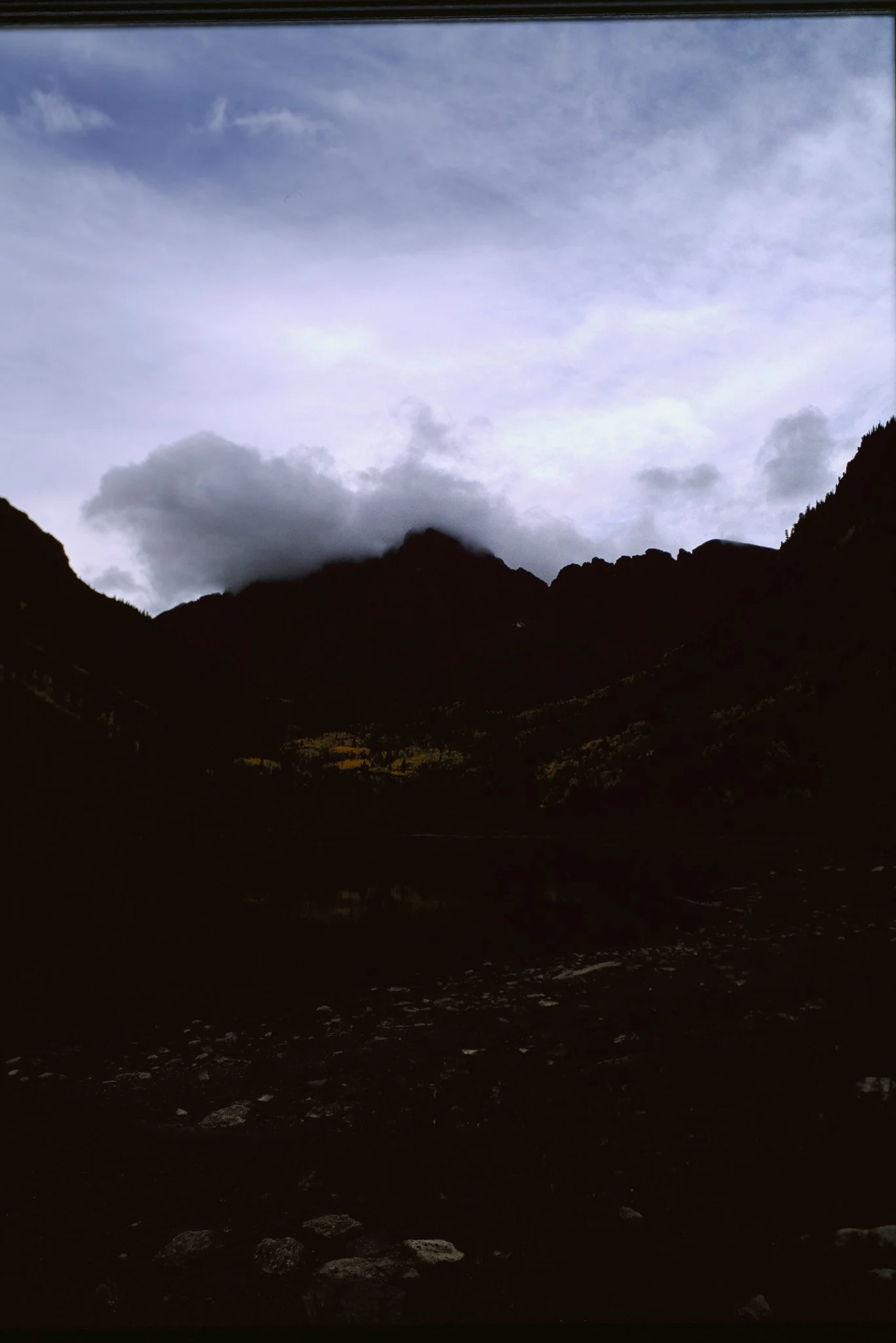
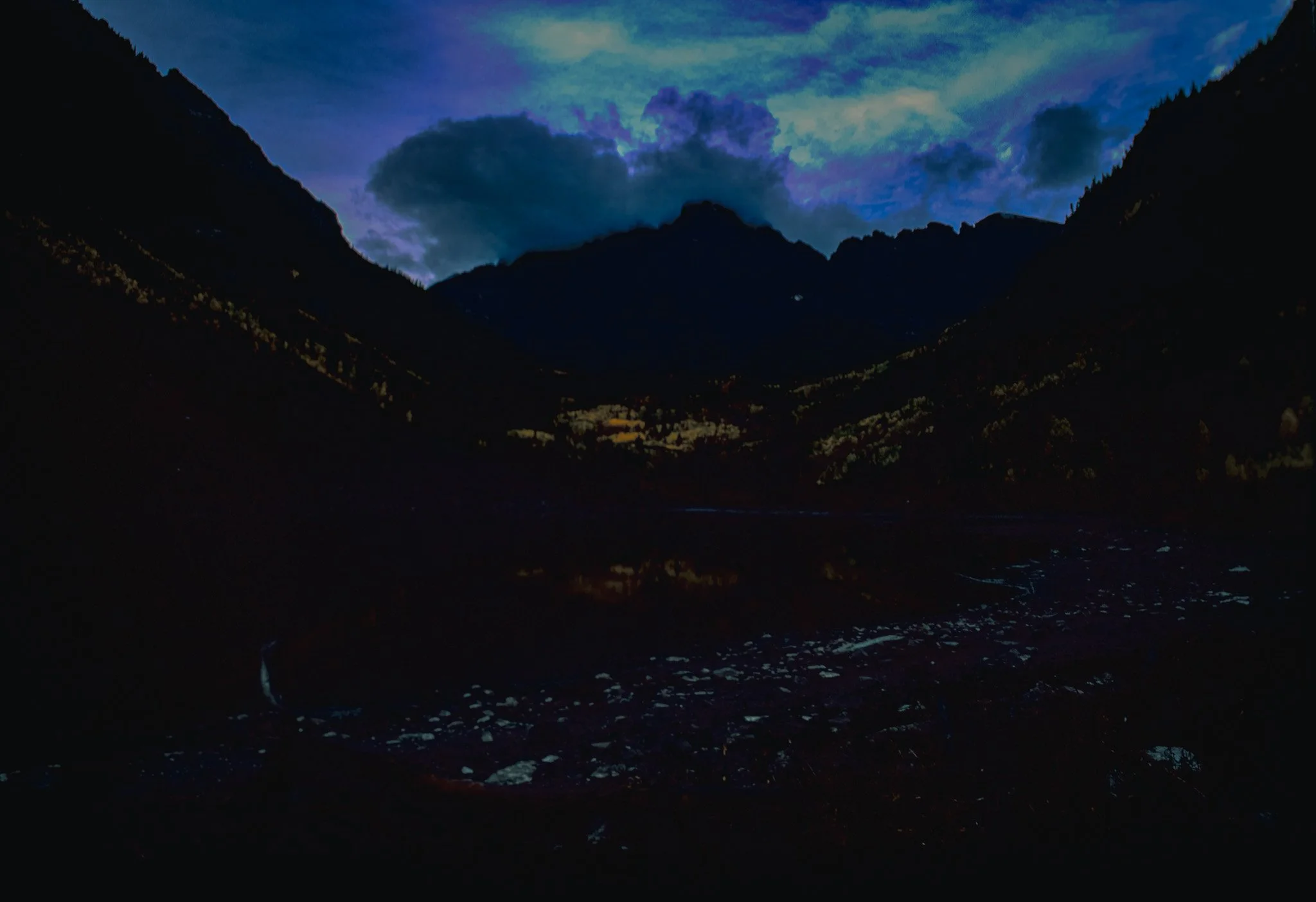
The resulting transparencies show exactly what this predicts:
Bright clouds retain some information.
Mountains become nearly featureless silhouettes.
Foreground detail almost completely disappears.
Attempts to brighten the scans produce severe blue, cyan, and magenta color shifts.
Additional lens falloff may make the edges even darker.
The conclusion
This lens was not merely a poor example of a Fujinon 90mm.
Its assembled optical system behaved approximately like a 155mm lens. Its marked f/22 delivered something near the exposure of f/56. Its edges were badly degraded, its field illumination was questionable, and its aperture scale was wrong by approximately 2⅔ stops.
The DNG analysis was not laboratory-grade sensitometry; a calibrated step wedge and a directly measured characteristic curve would be required for that. But the agreement between two independent good negatives, all three raw color channels, the 1.72× geometric registration, and the known film-development data makes the overall conclusion difficult to escape:
The meter was not the problem. The Frankenlens was quietly underexposing the film by nearly three stops.
The expensive lesson: test unfamiliar or repaired gear before trusting it with irreplaceable film. One controlled sheet and a comparison against known-good equipment could have exposed this Frankenlens immediately. Instead, its incorrect focal length and nearly three-stop exposure deficit consumed ten sheets of discontinued Velvia and Provia, plus six sheets of Portra 160. Film can be replaced—sometimes. The photographs, conditions, travel, and discontinued emulsions cannot. Test the shutter, aperture, coverage, focus, and actual transmission before loading anything precious.
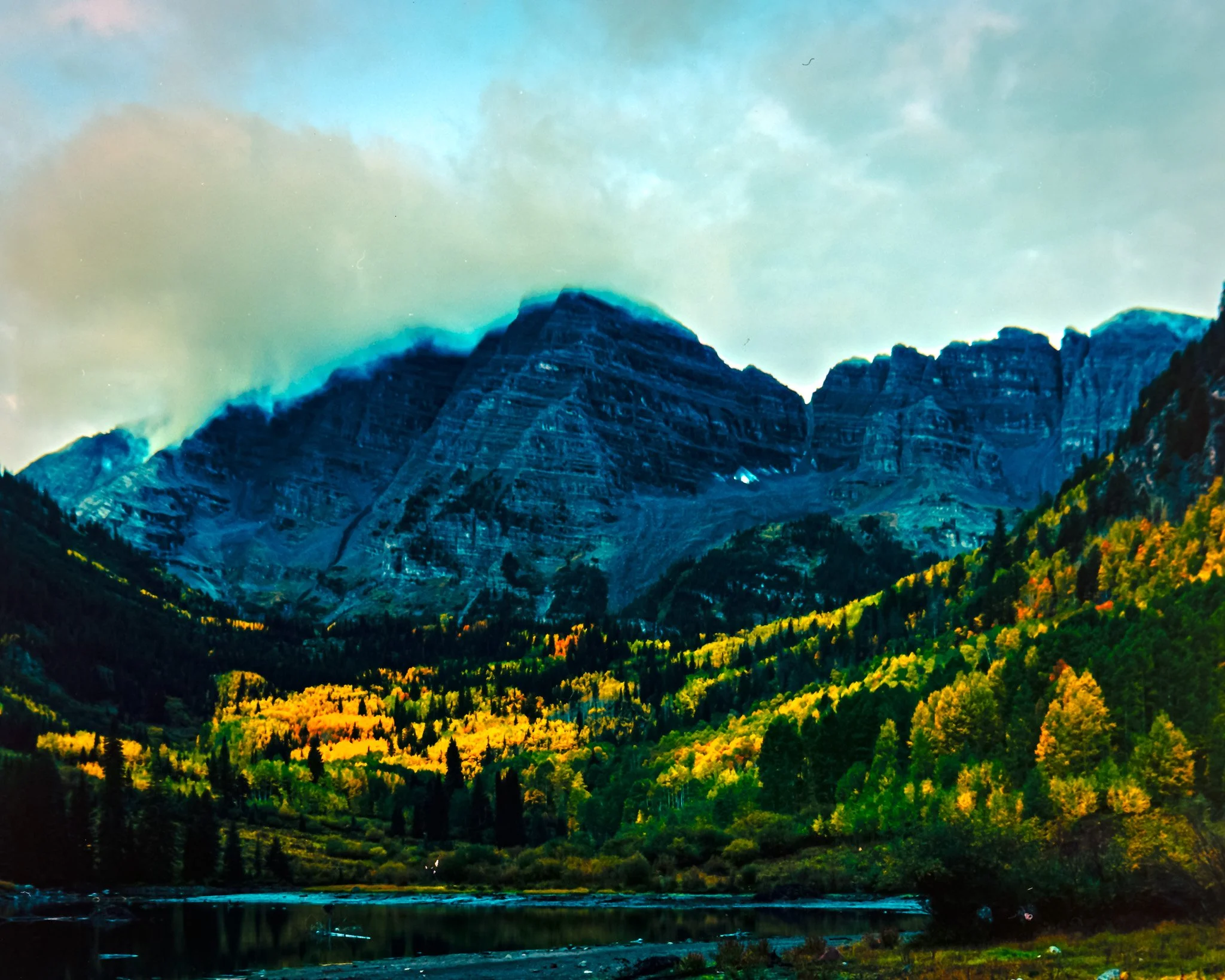
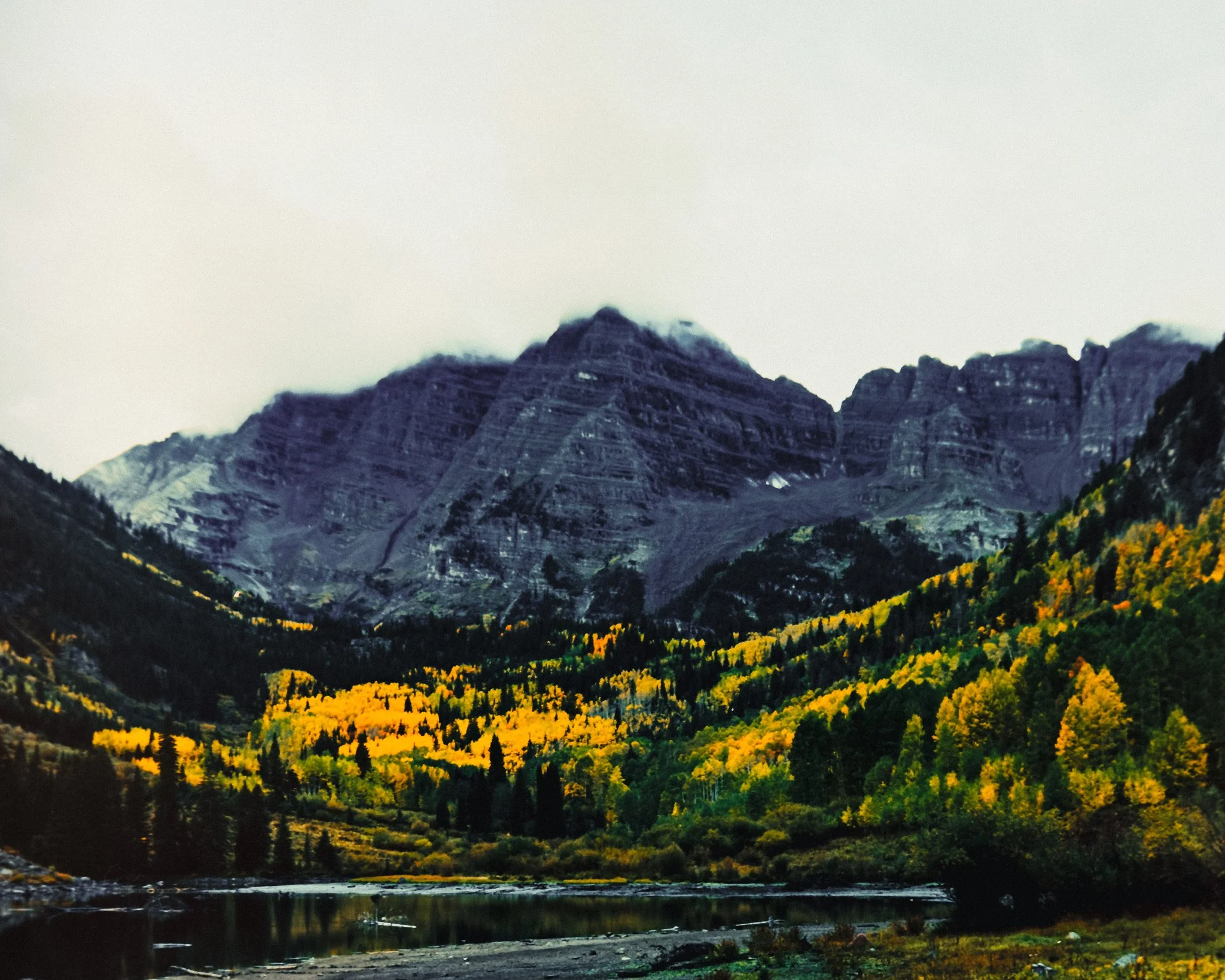
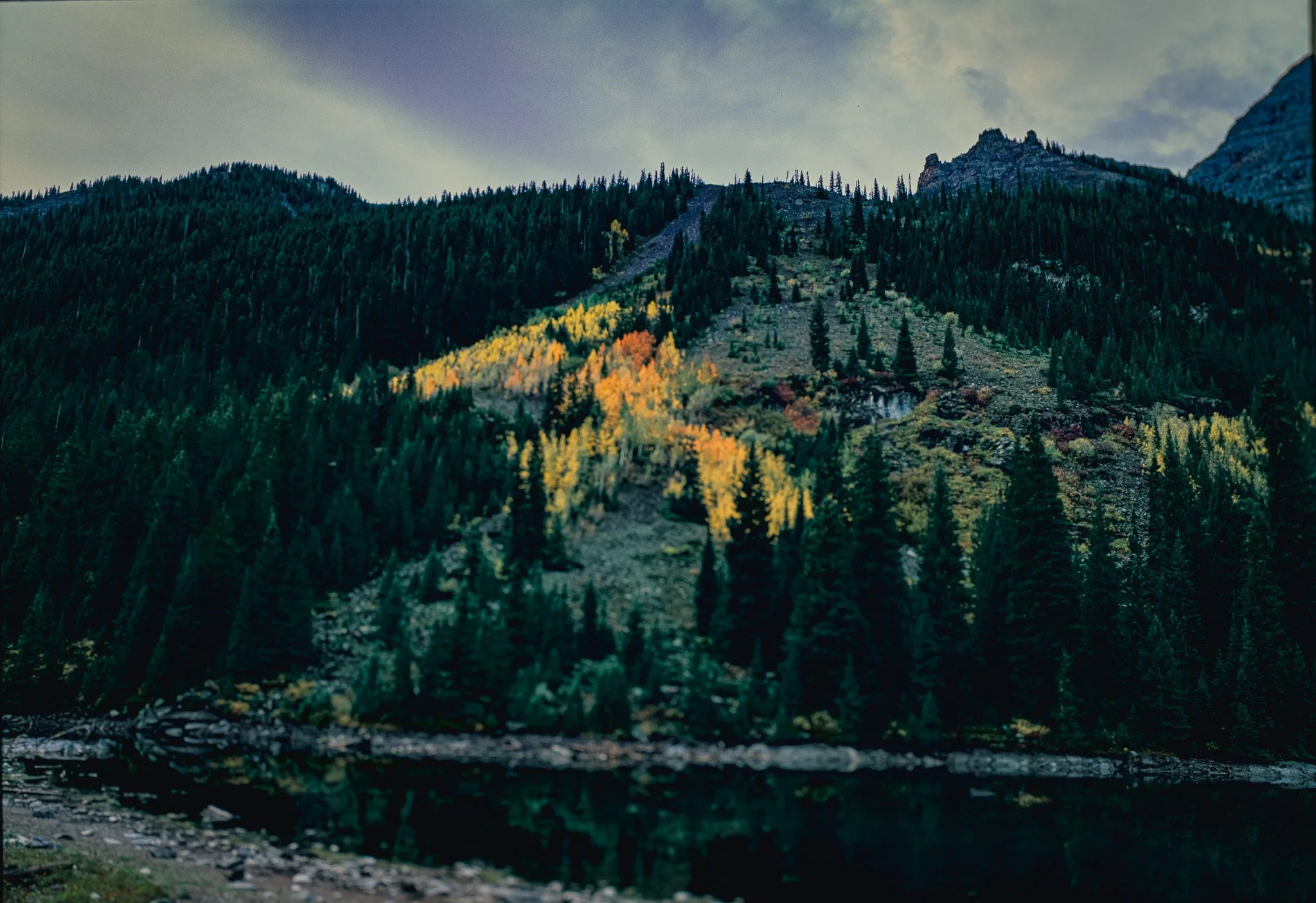
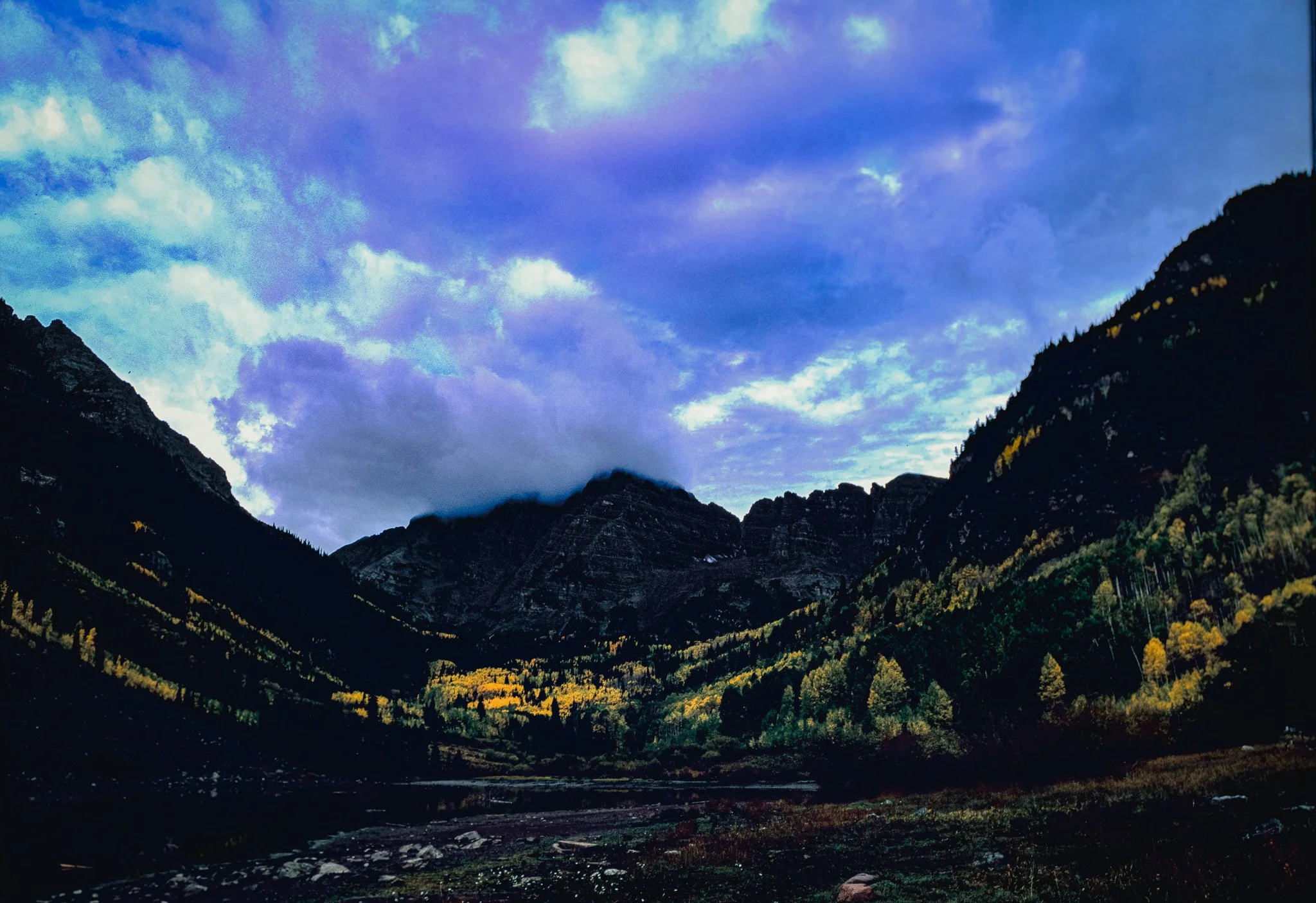
What it really looked like…
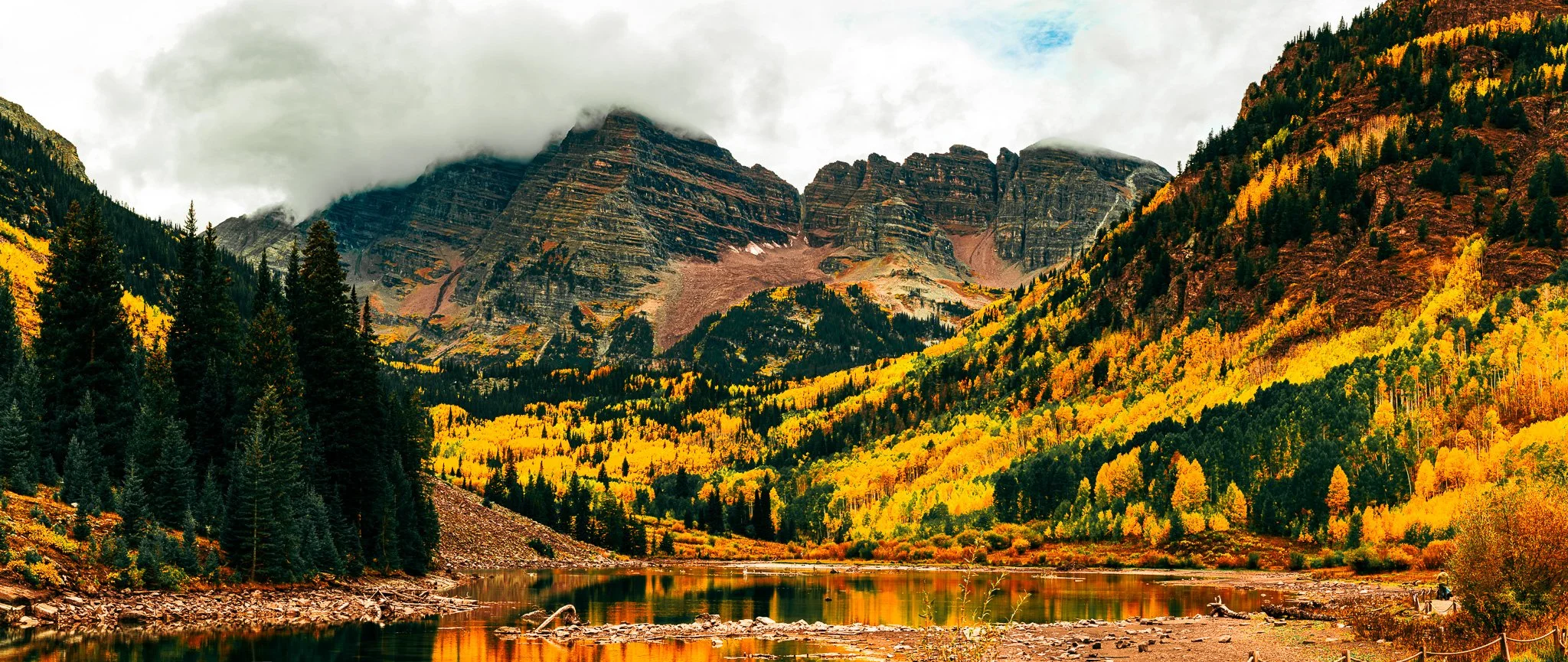
Shot on a Leica SL2 with 85mm Sigma art lens in 6 frames and stitched together using photo merge in Lightroom
